WHAT IS SCHOOL?
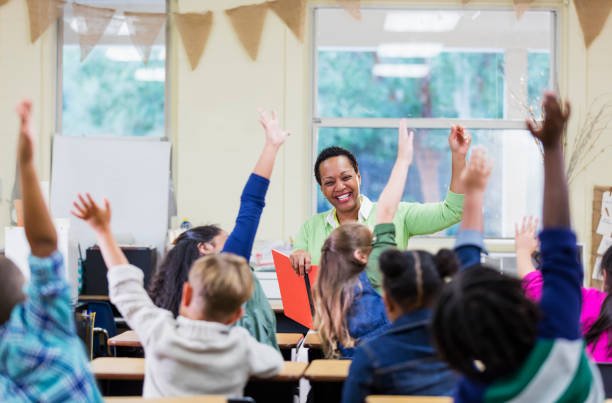
Often, I have students who use the terms “schooling” and “education” interchangeably, but as you can discern from this reading, they have different meanings. What is the difference?
Often educators enter the teaching field because they have a wish to educate others, but then their philosophies are transformed as they begin to pay particular attention to the network of personalities and ideas surrounding the particular schools in which they teach. No longer does the desire to teach others hold paramount importance, but instead, they become invested in schooling–quizzes, tests, detention and such. This can cause them to lose their focus on larger issues of education.
The function of schools can be divided into four major themes:
- intellectual
- economic
- social
- political and civic
what is Education
Webster defines education as “the process of educating or teaching.” Hmmm. Not particularly useful, is it? The word educate is further defined as “to develop the knowledge, skill, or character of…” Thus, from these definitions, we might assume that education means to develop the knowledge, skill, or character of students. But this definition requires that we further define words such as develop, knowledge, and character.
What is knowledge? Objectivists see knowledge as a body of information that exists “out there”—the results or products of human thought processes that have taken on a life of their own. In this view, Knowledge…with a capitol K…is the sum total of facts, truths, laws, principles, and ideas that man has produced. Human history is also considered Knowledge, although the accepted version varies from culture to culture, or from winner to loser! Codified in language, this Knowledge has been accumulated in books and other storage devices over the ages.
Purpose of Education
Education is the engine of our economy, it is the foundation of our culture, and it’s an essential preparation for adult life. Delivering on our commitment to social justice requires us to place these 3 objectives at the heart of our education system.
ECONOMY
we must ensure that more people have the knowledge and skills they need to succeed in a demanding economy.
The importance of strong literacy skills remain long after a young person has left school or formal education. Adults with good literacy skills (the equivalent of a good English Language ) are much more likely to be in work than those with lower levels of literacy: 83% compared to 55%.

We recognized the strong evidence demonstrating that quick fix phonics is the most effective way to teach children to read.
Employers want to see many more young people entering the labour market with high-level skills ,which aims to encourage more young people – girls and boys – to continue with learning to A level and beyond.

Culture
Equipping young people with the knowledge and skills they need to secure a place at a good university, start an apprenticeship, or find their first job, is a fundamental responsibility of all of us working in education. But the purpose of education is, of course, far broader.
As we all know, education has an intrinsic value as the hallmark of a civilised society and the foundation of our culture. Matthew Arnold was a great education reformer of the 19th century. He is best remembered now as a cultural critic, but he also spent 35 years as an HMI, the last 2 of which as Chief Inspector. In ‘Culture and Anarchy’, his best-known work, he articulated the liberal ideal of a high-quality education for all, which:

seeks to do away with classes; to make the best that has been known and thought in the world current everywhere; to make all men live in an atmosphere of sweetness and light, where they may use ideas, as it uses them itself, freely, – nourished, and not bound by them.
This ideal must be reflected in reality if we are to build an education system with social justice at its heart.
Engaging with a text firstly requires an ability to read. This includes decoding skill, but also reading fluency and speed of reading built up through practice over many years. But reading also demands background knowledge – of vocabulary and of context assumed by the author – assumed knowledge. Factual knowledge is essential for reading comprehension.
Mark Twain wrote, disdainfully, that:
I have never let my schooling interfere with my education.
Daniel Willingham, the American cognitive scientist, is clear that this denial of the importance of schools to culture and imagination is inconsistent with the scientific evidence. Willingham writes:
I don’t know why some great thinkers (who undoubtedly knew many facts) took delight in denigrating schools, often depicting them as factories for the useless memorisation of information… I for one don’t need brilliant, highly capable minds telling me (and my children) how silly it is to know things.
We must resist attempts to divide culture from knowledge, or to suggest that a focus on a core academic curriculum in school makes it more difficult to develop our young people into creative, engaged citizens.
Preparation for adult life
These 2 purposes of education – to grow our economy and nurture our culture – are vital. But I believe there is a third, very practical purpose to education. Adult life today is complicated, and we owe it to young people to ensure that they have the character and sense of moral purpose to succeed.
There is now very clear evidence that schools can make a significant contribution to their pupils’ achievement by finding opportunities to instil key character traits, including persistence, grit, optimism and curiosity.

other factors to consider;
- Acquisition of information about the past and present: includes traditional disciplines such as literature, history, science, mathematics
- Formation of healthy, supportive relationships among and between students, teachers, others
- Development of mental and physical skills: motor, thinking, communication, social, aesthetic
- Knowledge of moral practices and ethical standards acceptable by society/culture
- Respect: giving and receiving recognition as human beings
- Indoctrination into the culture
- Sense of well-being: mental and physical health
- Acquisition/clarification of values related to the physical environment
- Understanding of human relations and motivations
- Cultural appreciation: art, music, humanities
- Acquisition/clarification of personal values
- Self-realization/self-reflection: awareness of one’s abilities and goals
- Self-esteem/self-efficacy
- Capacity/ability to evaluate information and to predict future outcomes (decision-making)
- Capacity/ability to seek out alternative solutions and evaluate them (problem solving)
- Capacity/ability to live a fulfilling life
- Capacity/ability to earn a living
- Capacity/ability to be a good citizen
- Capacity/ability to think creatively
- Capacity/ability to recognize and evaluate different points of view

Conclusion
Three purposes – empowering young people to succeed in the economy, participate in culture, and leave school prepared for adult life – have consistently guided our programme of reform. Delivering on our commitment to social justice means placing these principles at the centre of everything we do, so that every young person has the opportunity to reach their potential.